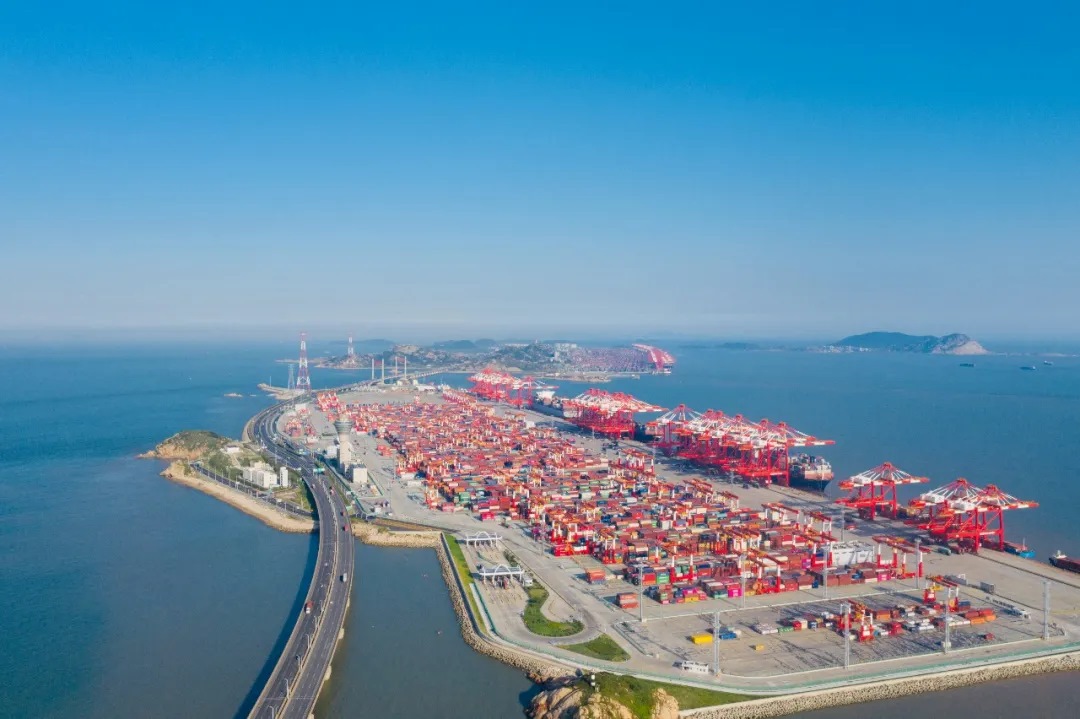
Red alert: 4.3 million TEU of shipping capacity stuck at ports, global supply chains on the brink of breaking!

According to the latest monitoring data from shipping organization Linerlytica:
The total capacity of container ships waiting to berth worldwide has reached 4.3 million TEU, surpassing the 4 million TEU peak during the 2022 pandemic, setting a new record for port congestion capacity globally.
Nowadays, the global container fleet has already expanded significantly, so the 4.3 million TEU of congested capacity only accounts for 12.6% of the total fleet; back at the pandemic peak, the 4 million TEU congestion accounted for as much as 15.7%.
In short: total numbers are record-breaking, but the risk of a systemic collapse is lower than during the pandemic, more like 'localized heavy congestion causing global ripple effects.'
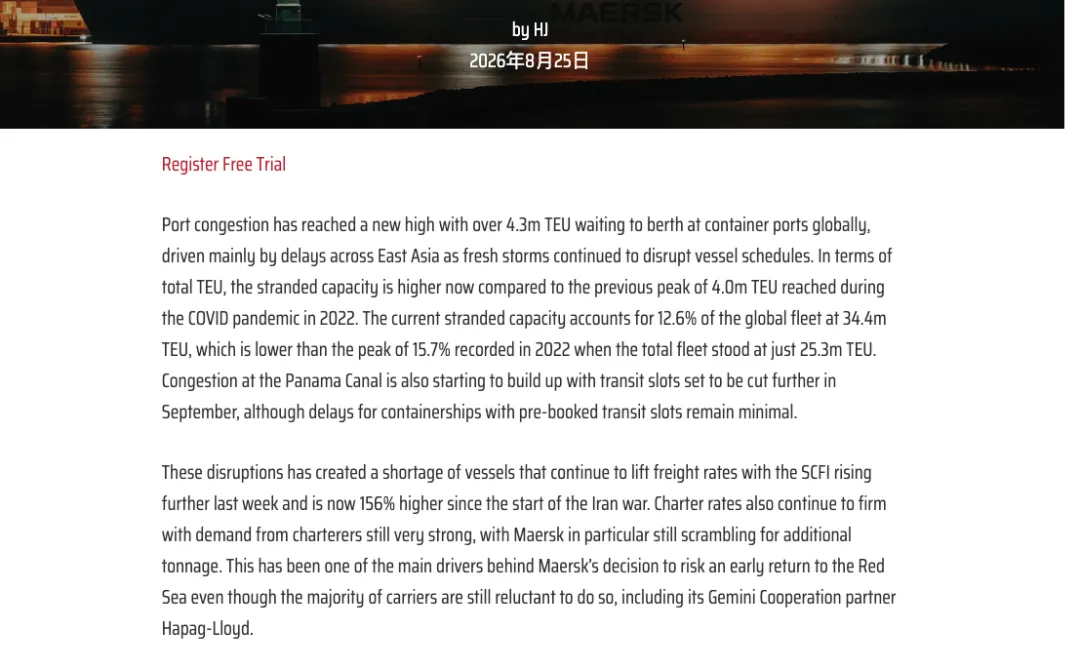
Hotspot Alert: North Asia Takes the Heaviest Hit, Domestic Ports Packed with Ships
The main battlefield of this global congestion is right in North Asia.
The waiting capacity in North Asia reaches 2.2 million TEU, accounting for nearly half of the world's congestion. The situation at domestic key ports is especially obvious:
✅ Shanghai Anchorage: up to 139 ships waiting to dock
✅ Ningbo Anchorage: 77 ships stuck waiting to berth
✅ Shanghai Yangshan Port: waiting time on several main routes has stretched to 5–8 days
At the same time, key Asian hubs like Busan, Singapore, and Colombo are piling up, chronic congestion at European ports continues to worsen, and with restrictions on major routes causing disruption, schedules on global main shipping lanes are completely in chaos.
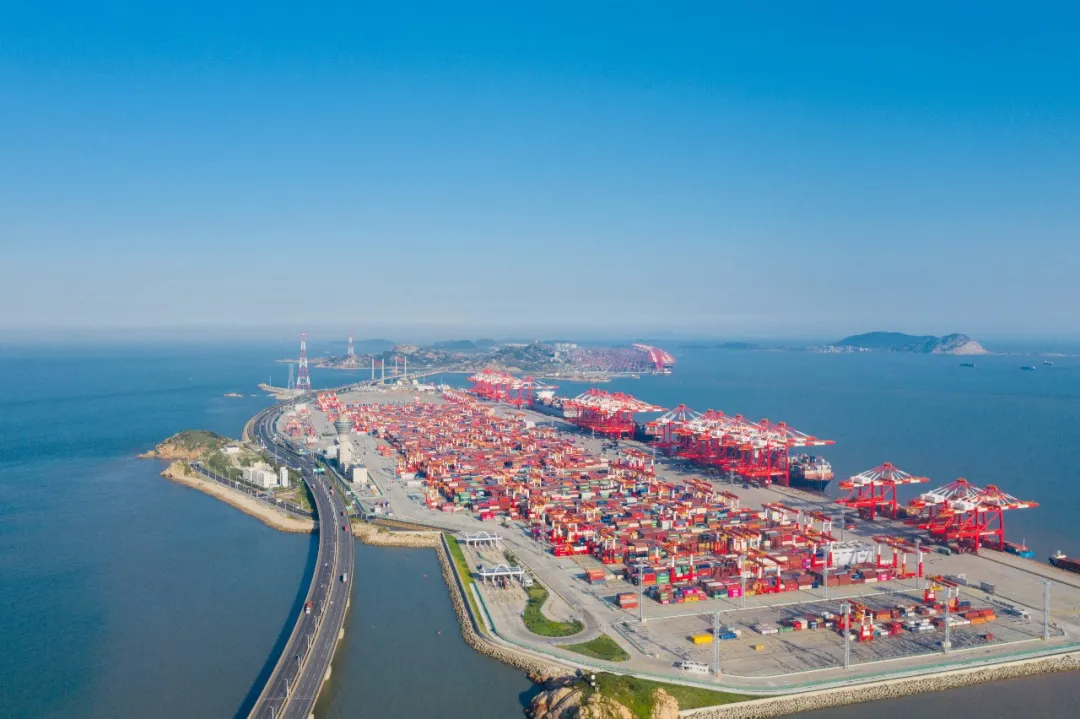
Ningbo-Zhoushan Port: Multiple terminals pause container loading and unloading
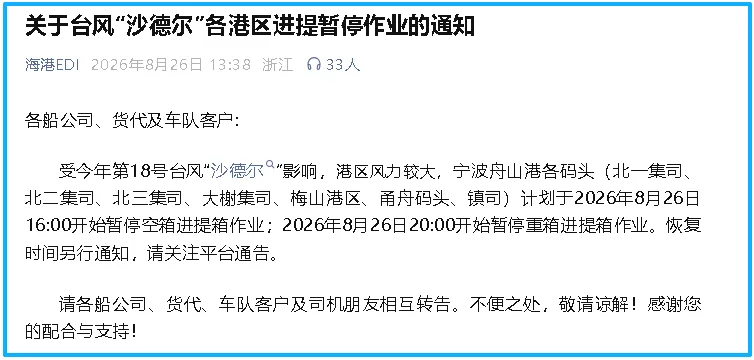
Due to Typhoon 'Saudel' (No. 18), several terminals at Ningbo-Zhoushan Port plan to suspend empty container handling from 4 PM on August 26, and full container handling from 8 PM. The resumption time will be announced later. The affected areas include Bei 1, Bei 2, Bei 3 collection and distribution centers, Daxie collection center, Meishan Port Area, Yongzhou Terminal, and Zhen collection center.
Shanghai Port: Launches Tiered Cargo Clearing Operations
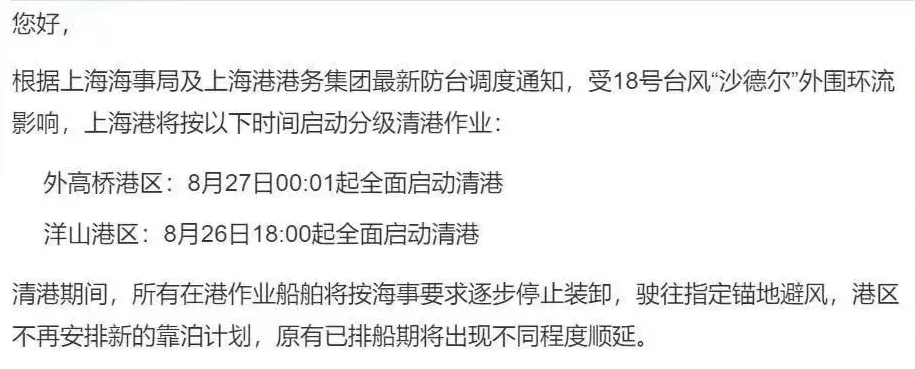
According to the latest typhoon dispatch notice from the Shanghai Maritime Bureau and Shanghai International Port Group, the Waigaoqiao and Yangshan port areas have fully launched port clearing operations.
During the port clearing period, all vessels operating in the port will gradually stop loading and unloading as required by maritime authorities and head to designated anchorages for shelter. No new berthing schedules will be arranged, and previously scheduled ship calls will be delayed to varying degrees. The new round of port closures is expected to further worsen the current port congestion!
Panama Canal restrictions could bring a new round of delays
Apart from Asian ports, the tightened transit capacity of the Panama Canal may further disrupt global shipping schedules.
Due to lower-than-expected rainfall in the canal area, the Panama Canal Authority announced that starting September 3, the Neopanamax locks will offer 9 daily transit slots, and the Panamax locks will offer 25 slots; from September 15, Panamax slots will drop further to 23.
The canal authority also reminded that vessels without prior reservations may face longer waiting times.
Right now, it’s not just about changes in shipping costs—you also have to watch actual berthing times, the risk of dropped containers, and transshipment connections.
With 4.3 million TEUs of capacity waiting in line, even if you secure a booking, there’s still significant uncertainty about whether your cargo will depart and arrive according to the original schedule.

Chain Reactions: Messy Schedules, Rising Freight Rates, and Chronic Delays
1. On-time Performance Plummets
Global vessel on-time performance has dropped to 60%–65%, with average delays of 5–5.5 days. Skipped ports, late arrivals, and last-minute container drops have become the norm.
2. Sea Freight Rates Keep Climbing
With effective capacity shrinking, market rates continue to rise. East Coast routes have broken $10,000/FEU, West Coast routes are holding strong around $6,700/FEU, and various congestion and canal surcharges keep increasing.
3. Shipping Market Heating Up
Tight available capacity is pushing up charter rates on large ships. Shipping companies are competing for vessel resources, and the trend of tight space and firm rates looks set to continue.
Response Guide
With peak season causing congestion, blindly scheduling shipments or booking last-minute can easily backfire. Here’s the safest shipping strategy for now:
1. Leave a 7–10 day buffer for all routes. Avoid rushing orders to hit deadlines to reduce the risk of delays.
2. Prioritize early booking for US and Central/South America routes. Panama Canal is still limited, making transfer times very unstable.
3. Keep track of both departure and destination ports, and anticipate issues like port congestion, stacking, or customs delays in advance.
4. Proactively update clients on expected delays. Inform them early about peak season congestion, rising costs, and unstable schedules to reduce after-sales disputes.
舱位预订请联系我们营销团队
| 海外海运 | Kathy | kathyzhou@rainbowell.com |
| 海外空运 | Snow | snowzhou@rainbowell.com |
| 华南市场 | Jim | jimzhong@rainbowell.com |
| 华南商务 | Wendy | wendygao@rainbowell.com |
| 宁波 | Mary | maryhu@rainbowell.com |
| 上海 | Justin | justinwang@rainbowell.com |
| 青岛 | Kevin | kevinwang@swansz.com |
| 天津 | Wendy | wendyxu@rainbowell.com |
| 重庆 | Flora | florazeng@rainbowell.com |
| 厦门 | Michael | michaellee@rainbowell.com |